
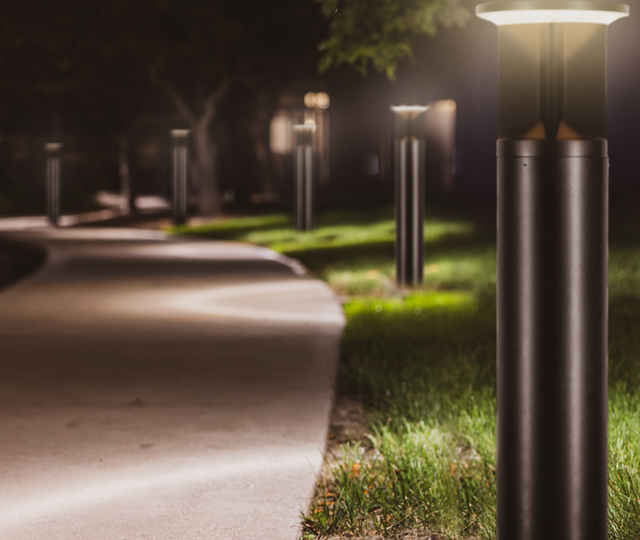
Outdoor area lighting plays an important role in ensuring safety and visibility. However, traditional fixed optical distributions often lead to common problems such as glare, poor lighting uniformity, and light trespass into surrounding areas. Adjustable light distribution (ALD) technology was developed to address these challenges, which is crucial for improving safety and reducing light spill in parking lots, streets, campuses, and commercial sites.
For businesses, using ALD can enhance the visual comfort of commercial spaces while effectively reducing operating costs, achieving both local ordinances and high efficiency. In this article, we will explore the benefits of using adjustable light distribution and how it improves lighting performance, reducing light trespass and environmental impact.
Lighting distribution refers to how a fixture directs and spreads light within a space. For example, in an outdoor parking lot, we want light to be focused on the ground and pathways rather than contributing to uplight and skyglow. Therefore, lighting distribution type is an important factor that directly impacts visual quality, functionality, and energy efficiency of a space. To better define and control it, lighting distribution primarily categorized into IES distribution types and NEMA beam classifications.
In lighting engineering, IESNA (IES Lighting Classification System) defines standardized light distribution patterns to describe the horizontal spread of light. This classification system helps designers select the most suitable luminaires based on the road width and the installation location.
● Type I: Narrow, linear distribution along a single axis.
● Type II: Slightly wider, elongated distribution with moderate lateral spread.
● Type III: Broad, forward-throw distribution with balanced lateral spread.
● Type IV: Wide, forward-focused distribution with minimal backward light.
● Type V: Symmetrical, circular distribution with uniform 360° distribution.
The National Electrical Manufacturers Association (NEMA) defines beam angle classifications to describe the width of a luminaire's beam. It categorizes the beam into 1 to 7 classes based on horizontal and vertical angles. NEMA beam classifications allow designers to quickly select the appropriate beam angle based on mounting height, illumination distance, and coverage area. It is mainly used for area lighting, sports lighting, and façade illumination.
| NEMA Beam Type | Beam Width |
|---|---|
| NEMA 1 | Very narrow beam |
| NEMA 2 | Narrow beam |
| NEMA 3 | Narrow-medium beam |
| NEMA 4 | Medium beam |
| NEMA 5 | Medium-wide beam |
| NEMA 6 | Wide beam |
| NEMA 7 | Very wide flood beam |
The following section breaks down each IES distribution type, helping engineers and lighting designers make informed specification decisions.
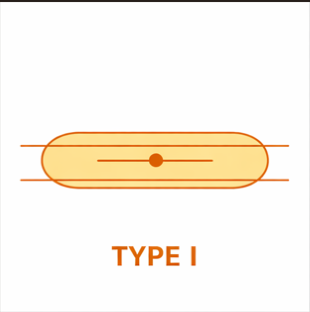 The light extends primarily in two directions, forward and backward, forming a long, narrow lighting area.
Application: Narrow roads, sidewalks, and small walkways.
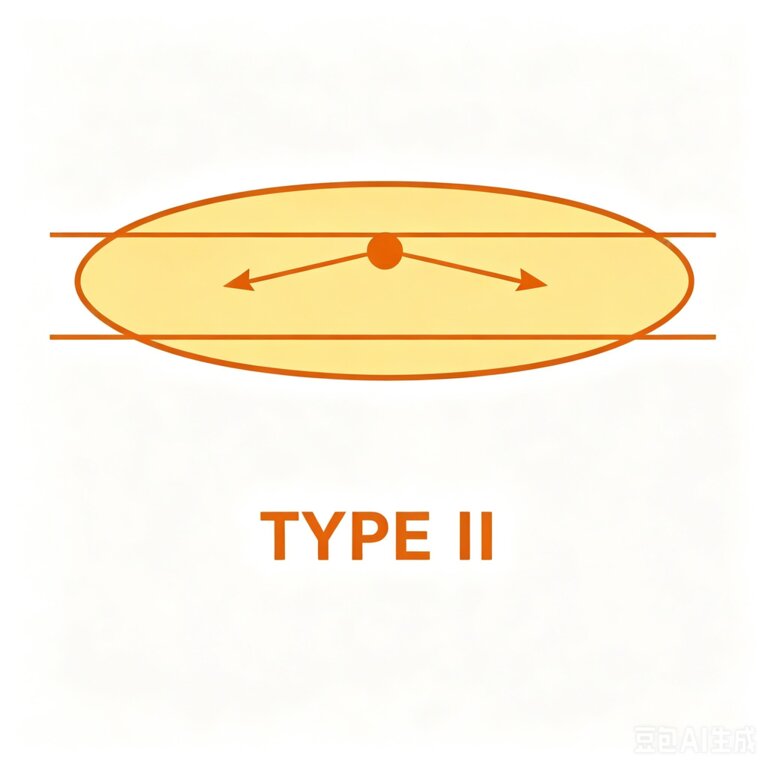 Type II is wider than Type I. The illumination width is approximately 1.5–1.75 times the fixture's installation height. It covers a wider area while maintaining directionality. When installed on the side of a road, it effectively illuminates the entire width of the road while minimizing light spill into the surrounding environment.
Application: Residential roads, side streets, wide sidewalks, and bike lanes.
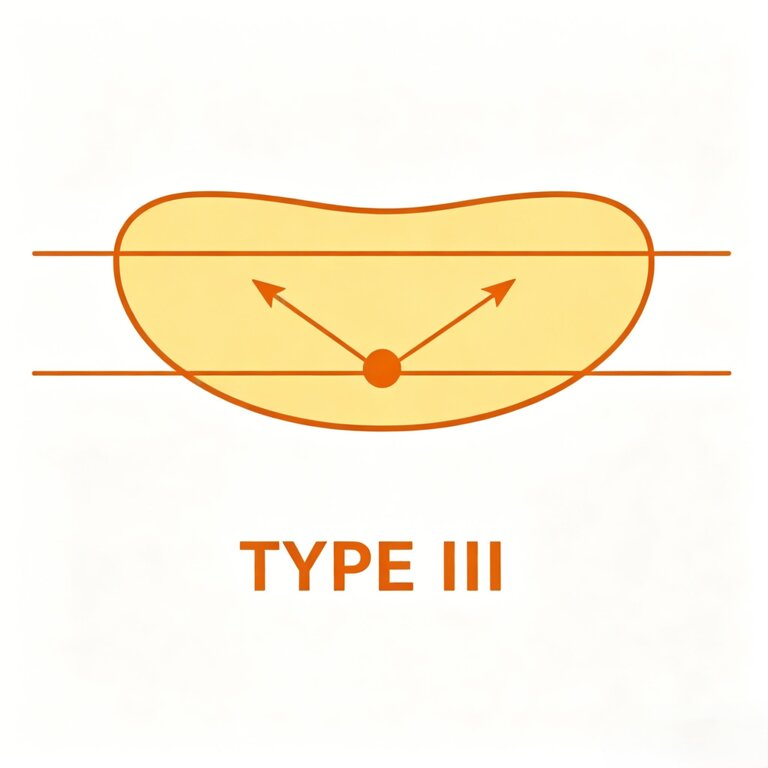 Type III is a commonly used type of area lighting. It features an asymmetrical forward distribution, providing a wider coverage area than Type II. This light distribution can diffuse light outwards, covering a larger lateral space.
Application: Parking lots, wide roads, community squares, and commercial facades.
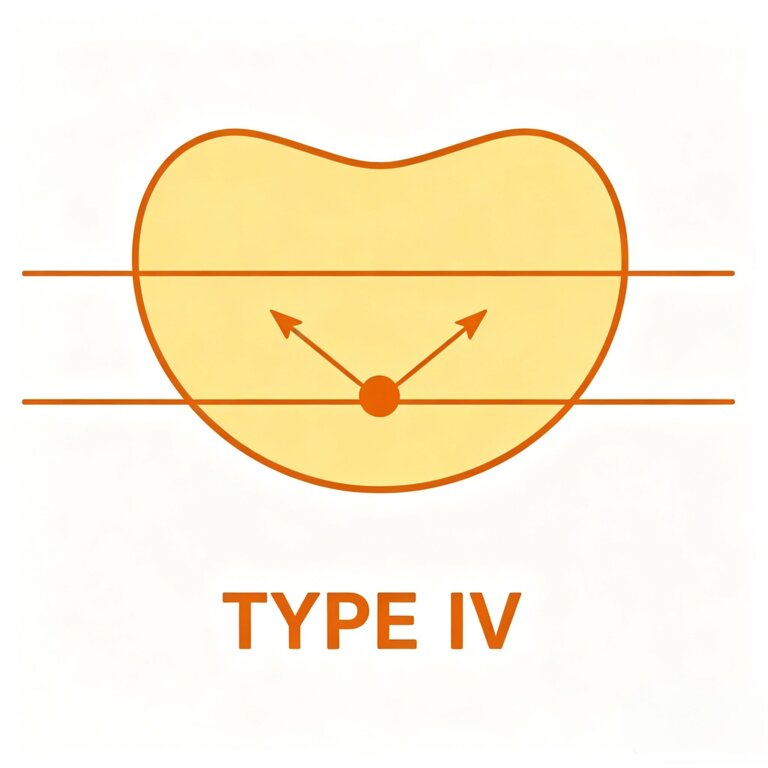 Type IV, also known as forward-throw distribution, features directed forward light, presenting a forward-throw asymmetrical distribution or a wider arc. Lighting fixtures are typically installed on the outer edge of the area, using strong forward beams to spread light evenly and minimize backlight.
Application: Building facade and wall wash lighting, edge lighting for boundary areas and large open spaces.
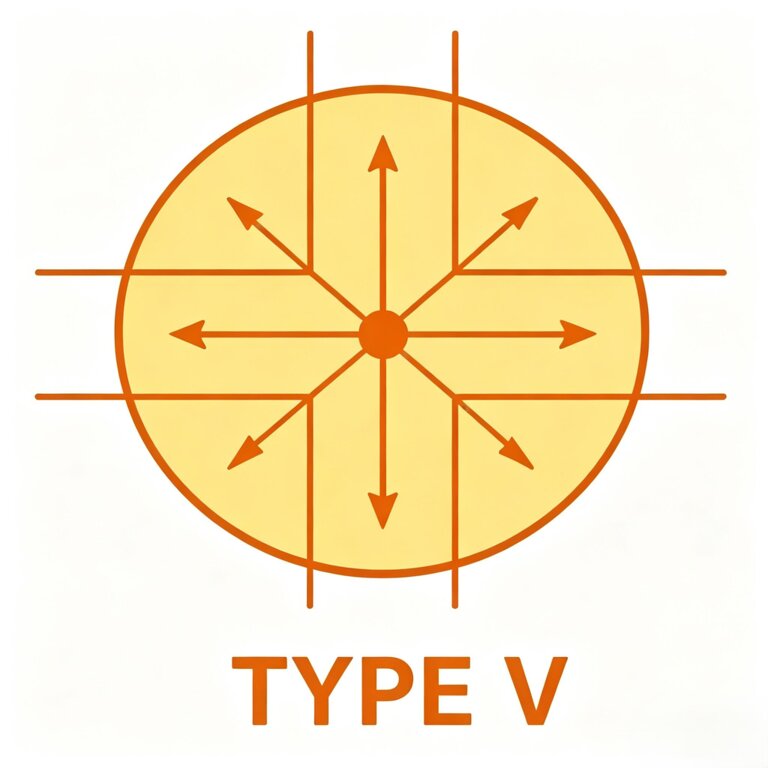 Type V is the most uniform and symmetrical light distribution type. Light diffuses 360° in all directions, forming a circular or circular symmetrical distribution. It is suitable for illuminating an entire area from the center.
Application: Large areas, such as parking lots, plazas, parks, and commercial outdoor areas
Light pollution and glare is becoming common in cities, resulting from poor control of outdoor lighting. A large portion of the global population lives in environments with light pollution, which shows that the effects of uncontrolled lighting are widespread. It disrupts sleep and harms ecosystems, while glare causes visual discomfort and reduces visibility.
Meanwhile, as cities focus on environmental protection and energy consumption, regulations are becoming increasingly stringent. Many regions are implementing dark sky regulations to reduce light pollution, including limiting brightness, directing illumination, adjusting fixture heights, and requiring lights to be turned off during business hours. If businesses fail to comply with these regulations, they may face rectification notices, fines, or even have their business licenses affected.
In this context, the importance of adjustable lighting distribution is apparent. Adjustable light distribution (ALD) refers to the ability of a luminaire to adjust the beam direction, illumination angle, and coverage area according to different outdoor lighting application settings.
Unlike fixed light distribution that can only provide a single beam angle, ALD offers greater flexibility. It can be adjustable based on application requirements. This allows a single luminaire to perform multiple tasks, reducing the cost of replacing or reinstalling luminaires.
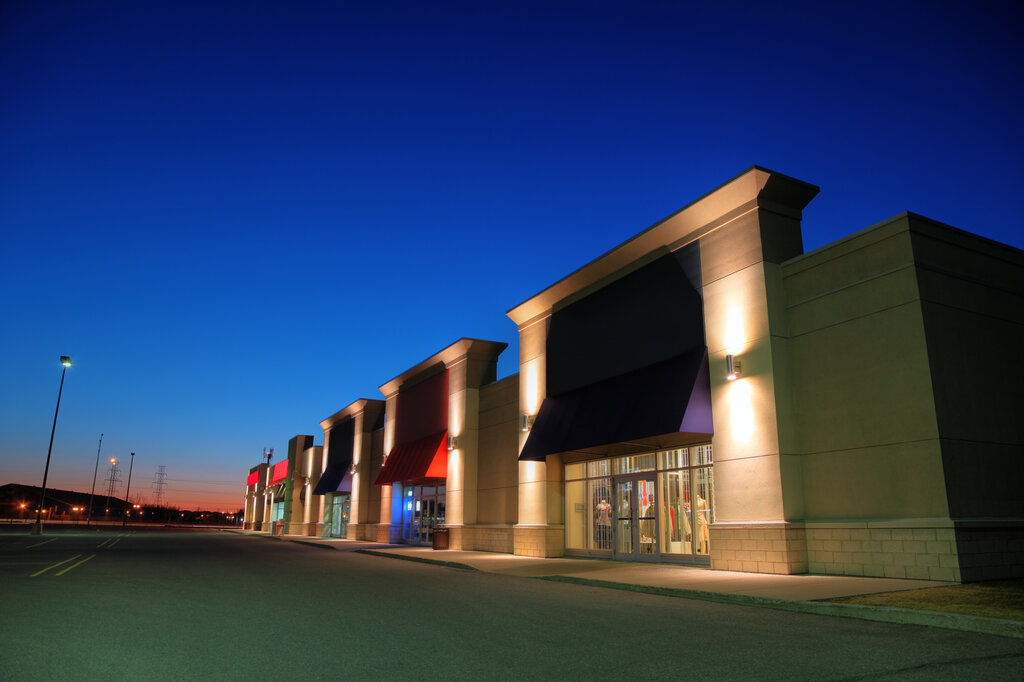
Adjustable light distribution can help improve nighttime safety by enabling precise control over light direction and angle based on site requirements. Nighttime environments are complex, and insufficient or uneven lighting increases safety risks. According to the Insurance Institute for Highway Safety (IIHS), improved roadway lighting can reduce nighttime single-vehicle accidents by 19% and nighttime pedestrian accidents by 23%. This demonstrates that more accurate and adjustable light distribution is crucial for nighttime safety.
● Reduce dark zones: The light can be focused on key areas such as sidewalks, entrances, steps, or traffic intersections. This allows pedestrians and drivers to see their surroundings more clearly, reducing the risk of tripping, collisions, or misjudging distances.
● Avoid glare: Glare can obscure the view of objects ahead, which is especially dangerous at night. ALD can prevent light from directly entering the field of vision.
A safer lighting environment lowers the risks of accidents, liability claims and operational disruptions. For facility and operations managers, optimized light distribution improves visibility across aisles, workstations, and storage areas, creating a more efficient and safer working environment. For energy management, high-efficiency LED lighting reduces overall power consumption while maintaining consistent brightness, supporting more sustainable and cost-effective lighting operations.
Next, we’ll discuss how LEDVANCE OPTI-SELECT technology translates these benefits into practical lighting solutions.
LEDVANCE offers field adjustable light distribution fixtures powered by its OPTI-SELECT technology. With a simple switch adjustment, you can customize the beam distribution, color temperature, and lumen output to meet the requirements of different projects. Compatible with multiple LEDVANCE fixture configurations, reducing the need to stock multiple models or replace luminaires when on-site conditions change.
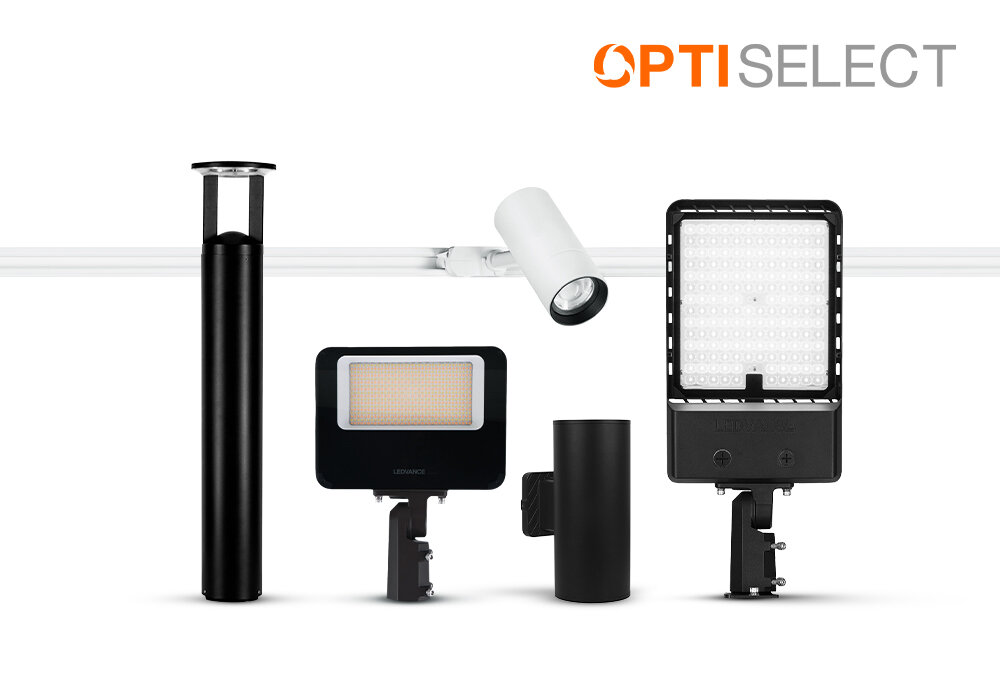
| Product Type | Features | Applications |
|---|---|---|
| Floodlight | Three adjustable beam angles, selectable CCT, and FLEX MOUNT | Building facades, billboard and signage lighting, construction sites, loading docks and warehouses, perimeter and security lighting, flagpole illumination |
| Area Light | Three selectable CCTs, three lumen outputs, and three distribution patterns (Type III, IV, and V) | Parking lots, walkways, general outdoor area lighting |
| Bollard | 90°, 180°, 270°, or 360° switch-selectable distribution, selectable wattage, selectable CCT, and integrated photocell | Parking lots, parks, driveways, gardens, pathways, sidewalks |
| Cylinder | Wall-mounted solution with up, down, or up-and-down modes and adjustable beam angles | Building facades, entryways, wall washing |
| Post Top | Adjustable distribution patterns (Types III, IV, and V), selectable CCT and wattage, integrated photocell, and controls readiness | Walkways, pathways, pedestrian zones, public squares, parks, parking lots |
| Sports Light | Three beam angles (30°, 40°, 60°) and 5×5 and 6×6 distributions | Arenas, sports fields, and large outdoor areas |
| Wall Pack | Selectable wattage and CCT with narrow, medium, or wide distribution | Walkways, building façades, parking lots, and perimeter lighting |
OPTI-SELECT aims to help outdoor lighting projects achieve a safer environment, lower light pollution and more compliant lighting effects. It deeply integrates compliance and flexibility, and can freely handle various complex scenarios. Whether it's parking lots, campuses, or industrial parks, these locations have different brightness requirements and light distribution modes. OPTI-SELECT, through its adjustable optical design, allows for multiple light distribution options within a single luminaire. It is flexible, efficient, and reliable, making it an ideal choice for modern outdoor lighting.
Our team supports on-site assessments, lighting solution suggestions, and more detailed product information. For specific applications, we can also help you select the appropriate light distribution to achieve optimal performance. Contact us or request a product sample today.
BUG Rating is an evaluation system for outdoor lighting fixtures, used to measure Backlight(B), Uplight(U), and glare(G). It helps determine whether a lighting fixture will cause light spillage, light pollution, or visual discomfort. The lower the value, the better the light control and the less likely it is to cause interference or pollution.
Adjustable light distribution is a worthwhile investment because it reduces glare and light pollution, making lighting safer and more comfortable. Adjustable light distribution reduces long-term operating costs by cutting the need for multiple luminaire models in stock, lowering reinstallation costs when site layout changes, and minimizing energy consumption by eliminating over-illumination.
Yes. It reduces light spillage into the sky, thus lowering light pollution. This makes it easier to comply with dark sky regulations.
Light trespass refers to light shining into places it shouldn't. For example, streetlights shining into a resident's bedroom. It can affect people's sleep and quality of life. Light trespass usually stems from poor outdoor lighting design.
FOLLOW US ON:


