
Many commercial lighting buyers often find the difference between PAR and BR bulbs unclear. However, despite some similarities in appearance, PAR and BR have significant differences in essence. The wrong choice can lead to poor lighting performance, unexpected installation challenges, or increased energy costs.
This article will deeply analyze the core differences between PAR and BR bulbs, providing you with a clear and comprehensive guide.
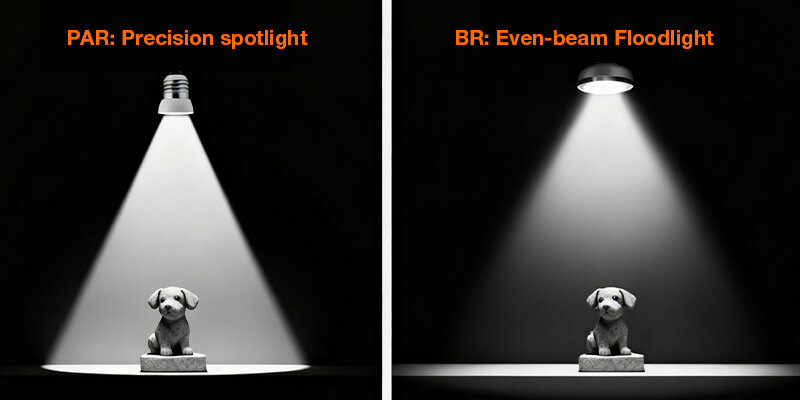
Before comparing PAR bulbs and BR bulbs, let's first understand their basic concepts. Both are reflective bulbs, but they have obvious differences in structure and lighting effect.
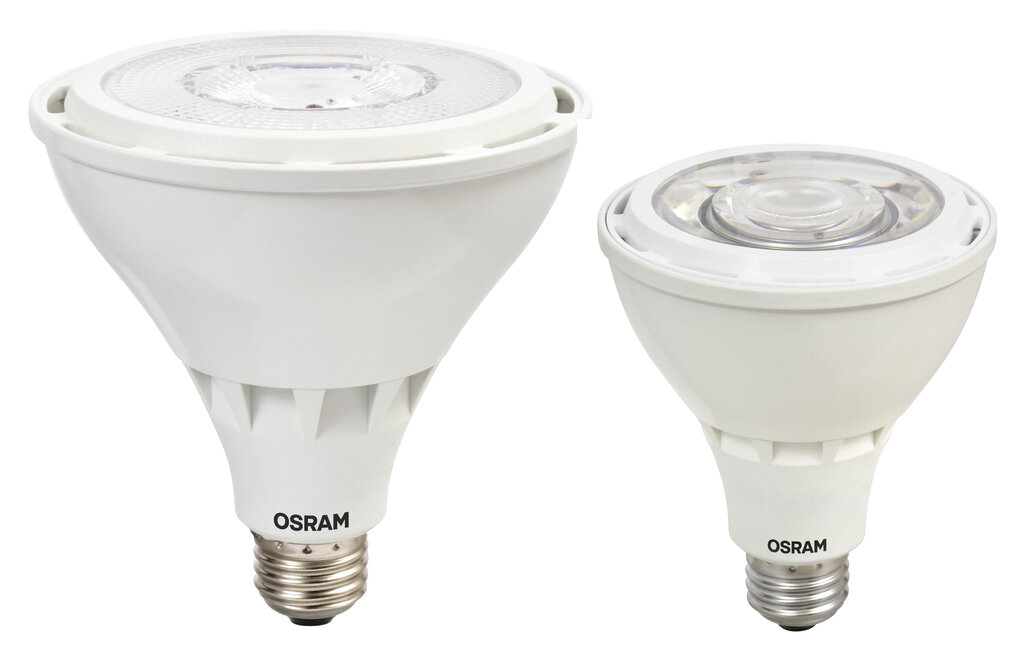
PAR stands for “Parabolic Aluminized Reflector”. Its feature is that a reflector and a lens are built into the bulb to concentrate the light and form a strong directional beam. The front end has textured glass that can adjust the beam angle. Modern PAR bulbs mostly adopt LED technology, replacing traditional halogen or gas discharge lamps.
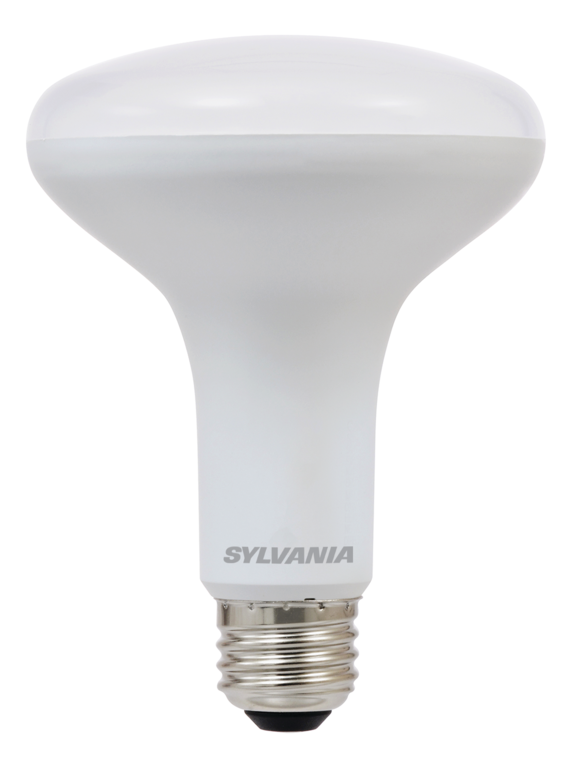 BR stands for “Bulged Reflector”. Its bulb surface is slightly bulging, which can make the light distribution more even and soft, suitable for large-scale lighting. It has a convex appearance that is wide in the middle and narrow at the neck and bottom. This design helps to spread light more evenly over a wider area.
Although these two types of bulbs look similar, they differ in some aspects. Distinguishing the differences between them can help you choose a more suitable bulb.
Shape Design:
● BR bulbs feature a rounded, bulging center that tapers smoothly toward the neck and base. It is relatively slender overall and coated with reflective materials inside.
● PAR bulbs are usually bowl-shaped. Its lamp cap, reflector and lens are an integrated whole.
Beam Angle:
● BR bulbs belong to floodlight bulbs, and the beam angle is usually large, generally reaching 90 degrees or more.
● PAR bulbs are mostly condenser bulbs, with narrow beam angles, and in most cases, they do not exceed 45 degrees.
Light Characteristics:
● BR bulbs' light is soft, with no sharp edges and fewer shadows. It is suitable for creating a comfortable and even lighting atmosphere.
● PAR bulbs have concentrated light and clearer edges. It may produce more obvious shadows, but it can also better highlight the illuminated object or area.
Installation Location:
● Due to its longer shape, BR bulbs may protrude more from the lamp and may install lower in recessed lamps.
● PAR bulbs are usually placed lower in recessed lighting fixtures and are more suitable for installation scenarios where the bulb body needs to be hidden.
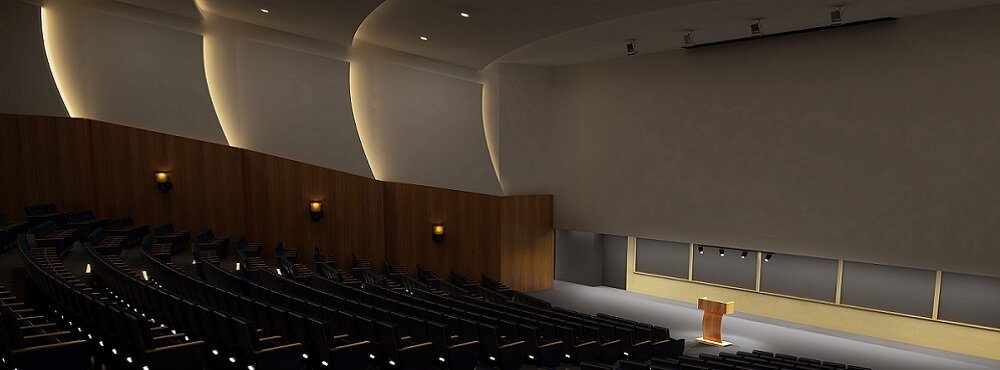
The size systems of the two are not only related but also significantly different due to the differences in design positioning. The number after “PAR” and “BR” represents the bulb diameter in eighths of an inch.
Common PAR Size: PAR16, PAR20, PAR30, PAR36, and PAR38
Common BR Size: BR20, BR30, and BR40
LEDVANCE has a full range of both bulb sizes and offers high-quality lighting support. Whether you need compact options for residential fixtures or larger formats for commercial applications, LEDVANCE got you! Each bulb is designed with advanced technology to ensure consistent brightness.
Company purchasers often hesitate between BR30 and PAR30. Below is a detailed comparison chart to help you make better decisions.
| Feature | LEDVANCE PAR30 | LEDVANCE PAR30 |
|---|---|---|
| Wattage | 10.5–11 | 7.5–15.5 |
| Lumens | 850–1050 | 650–1450 |
| CRI | 80–90 | 80–90+ |
| CCT | 2700K / 3000K / 3500K / 4000K / 5000K | 2700K / 3000K / 3500K / 4000K / 5000K |
| Lifespan | 25,000h | 15,000h |
| Dimmable | No | Yes |
| View Angle | 15° / 25° / 40° | >90° |
Both PAR30 and BR30, with a diameter of 3.75 inches, are standard compatible sizes for recessed downlights and ceiling lights.
The PAR38 has a diameter of 4.75 inches and is a model in the PAR series that offers a balanced size and performance. There is no corresponding BR38 model in the BR series. This is because the convex structure of the BR tends to cause excessive light dispersion at large sizes, thus losing its practical value.
PAR and BR bulbs have different focuses in lighting applications, and the main differences are reflected in beam angle, brightness concentration, and usage scenarios.
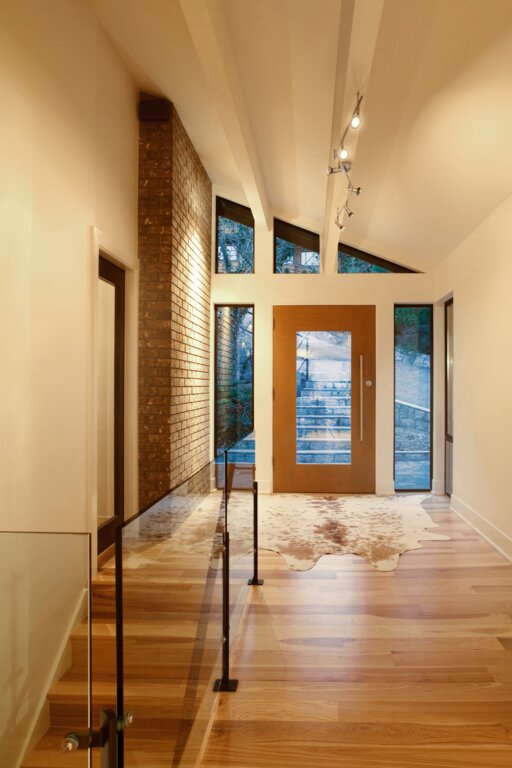 PAR bulbs are ideal for environments requiring directional lighting. Its outstanding beam control capability can firmly lock the light onto the target area, greatly enhancing the lighting efficiency. In the field of commercial lighting, PAR bulbs are often used in display spaces, windows, exhibition halls and museums to highlight the texture and details of exhibits. In addition, in stage, theater, photography and film and television production, PAR bulbs have become an important tool for shaping stage atmosphere and shadow levels. In outdoor lighting, PAR bulbs have good waterproof and dustproof properties and are widely used in building facades, squares, parks and landscape lighting.
BR bulbs are very suitable for overall lighting of indoor environments. In home lighting, BR bulbs are often installed in ceilings, downlights or track lights for main or accent lighting in living rooms, bedrooms, dining rooms and kitchens. In addition, it is also commonly utilized in residential or commercial dimmable systems, with different brightness adjustments to create a variety of light and shadow atmospheres. Beyond residential use, BR bulbs are also a good fit for commercial environments such as offices, retail stores, and hotels.
BR bulbs usually have a color temperature range of 2700K to 4000K. PAR bulbs are available from 2700K to 6500K.
Common BR bulbs in home lighting mostly use a warm light color temperature of 2700K or 3000K. It is perfect for bedrooms, living rooms, dining rooms and other spaces where you need to relax. In offices, shopping malls and other environments that require higher brightness, neutral white light around 4000K can also be selected.
Since PAR bulbs are often used for display, stage, outdoor and commercial lighting, high color temperature is more common. This light has a bluish hue and can highlight object details and color contrast. At the same time, some PAR lamps used in art exhibitions or dining spaces will also choose warm tones.
The core differences between PAR20 and PAR38 bulbs lie in their size, beam coverage range and applicable scenarios. PAR20 has a diameter of 2.5 inches and is compact in size. Its beam angle is mostly between 15° and 45°, making it suitable for close-range local lighting, such as focusing on cabinets, in front of mirrors, small space track lights or decorative paintings. It is often used in conjunction with recessed small spotlights.
PAR38 has a diameter of 4.75 inches, is larger in size, has higher power, and offers more flexible beam coverage. It can not only meet the needs of directional lighting in large indoor spaces but also has a waterproof model suitable for outdoor landscapes. The compatible lamps are mostly surface-mounted spotlights or large recessed downlights. The overall lighting range and brightness are significantly better than those of PAR20.
The main difference between BR38 and PAR38 bulbs lies in their light distribution and purpose. The "38" in both bulbs indicates a bulb diameter of approximately 4.75 inches, but the structure and luminous efficiency are different. BR38 bulbs have a curved reflector for soft, wide light, ideal for general indoor lighting. PAR38 bulbs use a parabolic reflector to create a focused, high-intensity beam, suited for outdoor, display, or accent lighting. In addition, PAR38 generally has better waterproof performance and can be used in outdoor environments, while BR38 is more inclined to indoor use.
FOLLOW US ON:


