

The global phase-out of fluorescent tubes is accelerating, and the U.S. market is following the same trend. As commercial and industrial facilities move toward more efficient lighting solutions, LED has become the preferred replacement.
When businesses evaluate fluorescent vs. LED options for tube lighting, each technology has distinct performance, efficiency, maintenance requirements, and operating costs. This article compares LED lighting vs. fluorescent tubes to help you decide which technology is the better fit for your projects.

As energy efficiency, environmental standards, and lighting quality requirements continue to rise, the limitations of fluorescent tubes have become increasingly apparent.
● Global regulations: Governments and businesses worldwide are enforcing stricter energy efficiency and mercury reduction regulations, which is accelerating the phase-out of fluorescent tubes.
● Lower energy efficiency: Compared to LED lighting, fluorescent tubes no longer offer a competitive advantage in terms of luminous efficacy and overall energy consumption.
● Lifespan: It typically has a shorter lifespan than LED lights, and frequent replacement will increase maintenance costs and downtime.
● Mercury content: Fluorescent lamps contain mercury, which can create environmental and health risks if not disposed of properly.
● Ballast dependence: Relying on electronic or inductive ballasts, it increases maintenance requirements
● Flicker and noise: Inferior or aging fluorescent tubes are prone to flickering and buzzing and unstable lighting performance.
LED lighting is a solid-state lighting technology built on semiconductor chips. It is widely used in residential, commercial, and smart city applications due to its energy efficiency and minimal maintenance. Combining performance, flexibility, and sustainability, LEDs have become a key technology driving modern green development and sustainable infrastructure.
The chart below highlights the key differences between LED and fluorescent tubes.
| LED Lighting | Fluorescent Tube | |
|---|---|---|
| Lifespan | 50,000+ hours (up to 200,000 for advanced models) | 6,000–15,000 hours (up to 35,000 for premium models) |
| Startup Performance | Instant full brightness, no warm-up time | Requires warm-up time |
| Energy Efficiency | High efficiency (uses 40–60% less energy than fluorescent tubes) | Lower efficiency due to ballast losses |
| Maintenance Frequency | Replacement cycles often exceed 10+ years depending on usage | Tubes typically require replacement every 1–3 years, plus ballast maintenance |
| CRI | 80–95+ | 70-85 |
| Lumens | 110–150 lm/W | 50–100 lm/W |
| Environmental Impact | Mercury-free, recyclable materials available | Contains mercury, requires special disposal |
LEDs improve workplace safety by operating at lower temperatures and containing no hazardous materials such as mercury. Each fluorescent tube contains approximately 3–5 milligrams of mercury. In environments with dense use of these tubes, improper handling or damage can pose a risk of environmental pollution. For businesses focused on health and safety, LEDs represent a practical and trustworthy solution.

According to a study from Michigan university, LED lighting is 18%–44% more efficient than T8 fluorescent lamps. Switching to LED lights can save money on energy bills and reduce electricity-related costs.
LED delivers measurable long-term financial returns rather than just energy savings. If upgrading 100 T8 fluorescent tubes to LED equivalents can typically reduce energy consumption by 25%–60%. In many commercial retrofit projects, this level of savings enables a payback period of approximately 2 to 3 years, driven primarily by reduced electricity costs. Over a 10-year operating period, the combined effect of lower energy consumption and reduced maintenance requirements can result in a substantially lower total cost of ownership (TCO).
LED lights have an impressive lifespan of up to 50,000 hours. In contrast, fluorescent lights typically last around 6,000 to 15,000 hours, and are more sensitive to temperature and humidity fluctuations, requiring more frequent replacements. This means LED lights last 3–8 times longer than fluorescent lights, which makes LEDs more suitable for high ceiling places or hazardous environments because it directly lowers maintenance frequency and cost.
LED lights are ideal for environments that require regular on and off switching, such as warehouses, laboratories, offices, and meeting rooms. Unlike fluorescent lights, which flicker when switched frequently, LED lights are specifically designed for such usage and maintain consistent illumination without flickering or turning off.
Fluorescent lights often buzz and flicker, which can be distracting and negatively impact concentration, especially in environments like hospitals and schools. In contrast, LED lights do not buzz or flicker, delivering steady, comfortable light without these problems. A study published in PMC found that LEDs are more beneficial for office-related visual and cognitive tasks.

LED lights can be easily dimmed to reduce glare, minimizes eye strain, and saves energy in high-intensity work environments such as medical facilities and retail spaces. It can automatically adjust color temperature and brightness according to different tasks or times, thereby enhancing workers health and work efficiency. In addition, LED systems can integrate with smart controls such as motion sensors, human centric lighting, daylight sensors, timers, and wireless management systems to automate lighting operation and further reduce energy consumption.
Whether you’re choosing LEDs for home or business, it is crucial to know the different factors that can impact your decision. Including:
If you decide to use plug-and-play LED tubes, confirm the type of the existing fluorescent tube, such as T8, T5 or T12 tubes, as this determines whether the size and interface of the LED replacement match. Or, using ballast-free LED tubes that need to rewire the fixtures.
Besides LED tubes, you can choose to upgrade with other types of LED luminaires, such as floodlight, downlight, high bay, panel, and spotlight. It requires removal of the existing fluorescent tube system and supporting layout, including luminaires, ballasts, and sometimes ceiling wiring configurations. This type of upgrade often involves re-designing the lighting layout to match the new LED fixture distribution, mounting method, and photometric performance.
When upgrading fluorescent tubes to LED lighting in commercial settings, it is not advisable to replace them based on the original wattage. Instead, focus on lumen and confirm whether the actual lighting output meets the space requirements. For example, the actual output of a traditional 32W T8 fluorescent lamp is usually around 2,800–3,200 lm, while if replaced with LED lighting, select similar or higher lumens product according to the needs of the site. For large-scale upgrade projects, it is recommended to conduct illuminance simulation or on-site trial installation before the final replacement to ensure energy conservation while improving the overall lighting performance.
Fluorescent tubes are large-area and soft surface light sources with strong light diffusion, so in office environments, people's perception of glare is usually not as obvious as that of LEDs. Therefore, it’s important to pay attention to glare control and choose LED products with good diffusion design. Also, properly arrange the installation height, spacing, and illumination angle of the lighting fixtures that also affect glare.
LEDVANCE helps Saba Bamsa underground car park upgrade from fluorescent tube to LED T8 equipped with a dimmable and DALI system. With a luminous flux of 2,400 lm and an efficiency of 160 lm/W, the LED T8 Tubes provide brighter, more efficient lighting for parking areas, improving visibility, comfort, and safety.

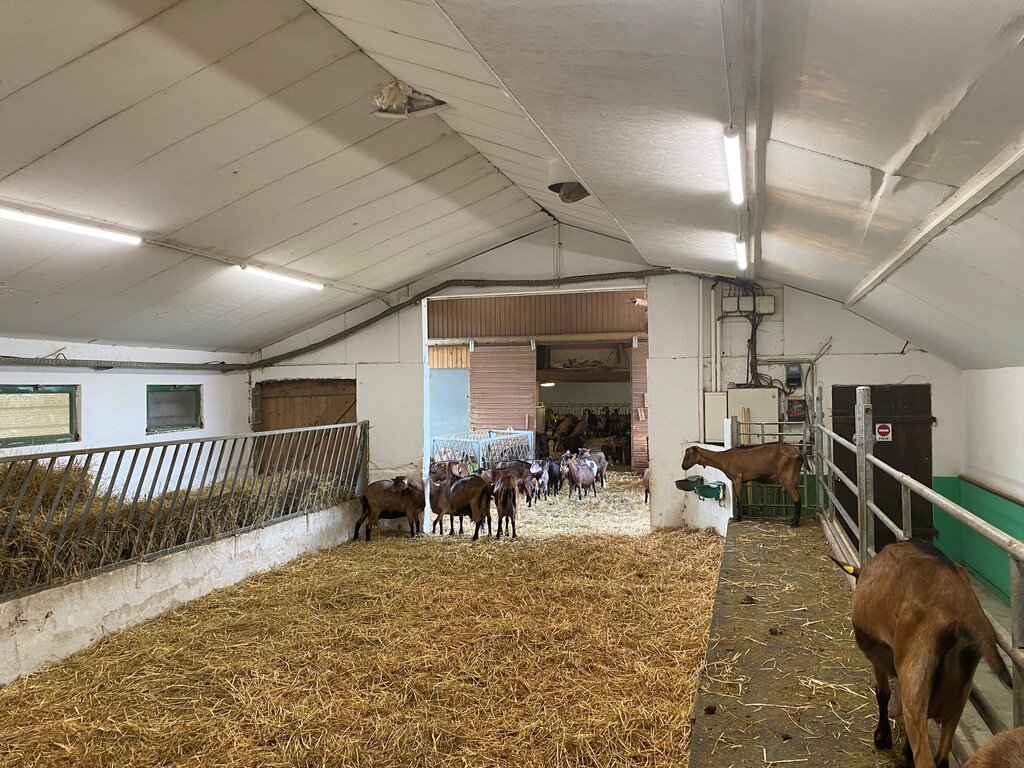
Another LED retrofit project solved the lighting challenges of a goat farming facility exposed to temperature fluctuations, dust, ammonia, and high humidity. The existing fluorescent tubes lacked durability and sufficient waterproof protection, while also generating high energy and maintenance costs. After upgrading to LEDVANCE damp-proof IP66 and IP69K LED luminaires, the facility reduced energy consumption by up to 55% and improved goat well-being with more reliable lighting. The luminaires also comply with IFS (International Featured Standard Food) and BRC (British Retail Consortium) standards.
In conclusion, compared with traditional fluorescent tubes, LED lighting delivers higher energy efficiency, longer lifespan, lower maintenance frequency, and better lighting quality. If you are planning to replace fluorescent tubes in commercial or industrial spaces, LEDVANCE offers a wide range of professional LED upgrade solutions. Contact us anytime for details, and we’ll respond promptly.
Yes. In most cases, LED tubes can replace fluorescent tubes, but whether they can be directly substituted depends on the type. Plug-and-play LEDs can directly use the original ballast, while bypass LEDs require wiring modification. Before installation, it is necessary to confirm the compatibility of voltage and lamps.
They should be collected and delivered to designated hazardous waste facilities, certified recycling centers, or local utility and environmental programs. Avoid breaking the tubes during handling, storage, and transport to ensure safety and prevent environmental contamination.
In commercial projects, the cost of upgrading fluorescent tubes to LEDs depends on the number, type, and installation method of the tubes. It generally includes the cost of the LED tubes, rewiring, or labor costs. Upgrading commercial fluorescent lighting to LEDs typically costs between $2.00 and $5.00 per square foot for full fixture retrofits, or $50–$150 per fixture for labor and materials. For most commercial facilities, energy savings alone typically recover this investment within 2 to 3 years.
To identify LED lighting rebates by state, check your local utility provider’s website under “Energy Rebates” or “Efficiency Programs.” You can also use databases like DSIRE to filter incentives by state and product category for up-to-date subsidy information.
For plant lighting, LED grow lights are generally a better choice than fluorescent grow lights. LEDs offer higher luminous efficacy, lower energy consumption, longer lifespan, and spectrums that can be precisely tailored to different stages of plant growth. In comparison, fluorescent grow lights are less energy-efficient, experience faster lumen depreciation, and are typically more suitable for small-scale, low-budget, or short-term growing applications.
FOLLOW US ON:


