

A19 refers to a bulb shape with a diameter of approximately 2.375 inches. E26 refers to a bulb base, with a screw thread diameter of 26 mm. E26 and A19 are two of the most common standards in commercial and residential lighting applications, yet they’re often misunderstood or used interchangeably.
If you can’t tell what’s the difference between E26 and A19, this guide delivers a comprehensive comparison to support more informed purchasing and installation decisions.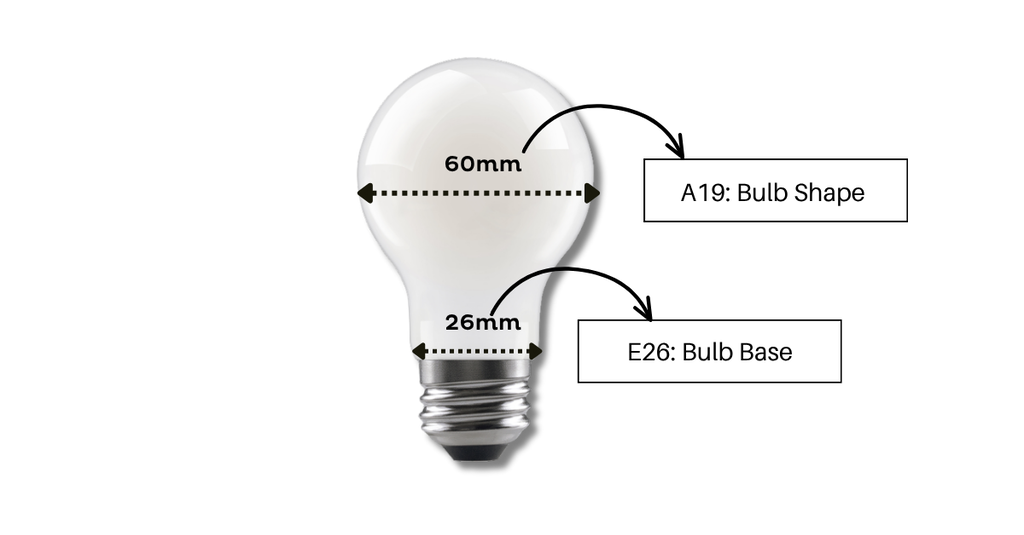
A19 is the most common standard bulb shape in the present market, which is commonly used in household and commercial lighting scenarios.
‘A’ represents bulb shape like a classic pear and is the abbreviation of “Arbitrary”.
‘19’ refers to the bulb’s maximum diameter of 2.375 inches.
This size and shape have already become people's typical impression of ordinary light bulbs. A19 can be seen in almost every household and office.

One of the greatest advantages of the A19 bulb is its versatility. A19 is usually equipped with an E26 or E27 screw base that are respectively used in the North American and European markets. It is fully compatible with most lights, such as ceiling lamps, chandeliers, table lamps, wall lamps, etc. Therefore, no matter whether it replaces traditional incandescent bulbs or installs LED bulbs, A19 is a popular and easy-to-buy option.
The A19 bulb was mainly representative of incandescent bulbs. Nowadays, A19-shaped bulbs are prevalent in various types of light sources such as LED and fluorescent lamps. Especially LED A19 bulbs, due to their higher energy efficiency, are gradually replacing traditional incandescent bulbs and energy-saving lamps.
For buyers and engineering projects, A19 bulbs offer several advantages thanks to their standardized dimensions and mature technology. When buying in large quantities, you don’t have to worry about whether the bulbs will fit. Their standardized size ensures compatibility with most fixtures. During product design or lamp development, the A19’s wide adaptability cuts down on development costs and speeds up the process.
The A19 bulb market is well stocked, so you can easily get what you need. Plus, prices are transparent, making them ideal for large-scale lighting upgrades in projects.
In short, A19 bulbs are a practical, cost-effective choice for any business needing consistent, reliable lighting solutions.
E26, known as a Medium Edison Screw (MES), is currently the most common bulb base specification in the North American market.
"E" refers to the Edison screw, an innovative screw-in design pioneered by Edison. "26" indicates that the thread diameter is 26 millimeters.
This socket type is extensively applied in various lighting fixtures for homes, offices, commercial spaces, etc., and remains one of the most commonly used mainstream lamp socket designs.
As long as the bulb has an E26 base, installing traditional incandescent bulbs, energy-saving CFLs, or modern LED bulbs is as simple as screwing them in which is very convenient to use. This universal compatibility makes E26 a key standard interface in lighting systems. It also makes swapping out or upgrading bulbs a breeze for companies.
E26 is the basic interface in regions such as North America and Japan and is compatible with over 90% of household and commercial lighting fixtures.
The E26 screw-type base is usually used in combination with various bulb shapes such as A19, ST64, G95, and T10. Among them, the most common one is the A19 bulb, which is also the pear-shaped bulb that everyone is most familiar with. As long as it is an E26 base, it can be easily installed on the vast majority of lamps.
E26 and A19 are not competing specifications. When selecting a replacement bulb, first verify that the base type matches the fixture socket, then choose the bulb shape that best suits the application and available space.
| Feature | E26 | A19 |
|---|---|---|
| Category | Base Type | Bulb Shape |
| Measurement | 26 mm diameter | ~60 mm (2.375 in) |
| Determines | Fixture compatibility | Light distribution & appearance |
A19 is a physical shape standard that affects the size and light distribution of the bulb. E26 is an electrical interface standard that determines the compatibility between the bulb and the lamp holder.
For better understanding, here are some bulbs named by different numbers.
Other bulb shapes, besides A19, include:
● B (Blunt Tip): Conical decorative bulb.
● C (Candle): Candle shape.
● G (Globe): Round bulb.
● T (Tube): It is often seen as an alternative to fluorescent lamps.
● R (Reflector): Reflective bulb.
Other base types like E26 include:
● E27: Medium Edison. Commonly used standard interfaces in Eurasia. It is similar in size to E26 and mostly interchangeable.
● B22: Standard bayonet lamp holder, which is the mainstream household lamp holder specification in the UK and other regions.
● G13: Two pins with a distance of 13mm, for T8 and T12 fluorescent tubes.
E26 handles the connection side of things, while A19 is all about the light emission. Although most A19 bulbs use E26 connectors, there is no necessary correlation between the appearance standard and the connector.

As for application range, most A19 bulbs emit light in all directions and are suitable for uniform illumination. There are various types of bulbs with the E26 interface, including PAR, BR and so on. It is suitable for professional lighting applications.
When upgrading your lighting system, it is necessary to first confirm the interface type of the lamp, and then select the appropriate shape based on the lighting requirements to ensure a perfect match.
A19 and E26 are often misunderstood, mainly because they describe two completely different dimensions, but they often appear together in practice. Many light bulb manufacturers lack intuitive packaging design. They often print "A19/E26" together. Ordinary consumers, lacking expertise in the lighting industry, easily assume these are two different names for the same product.
The other reason is market default pairing. Most A19 bulbs do indeed use E26 base, especially in the North American market. This default combination creates a fixed perception that A19 is equivalent to E26.
Meanwhile, the product often lacks clear information. Many online product pages or instruction manuals fail to clearly explain the meaning of parameters, simply listing specifications. Buyers without lighting expertise often find it difficult to distinguish between the shape and the lamp holder.
For commercial lighting, misunderstandings about A19 and E26 can cause more practical problems and have a greater impact than for residential lighting.
● In commercial projects, it is usually that they select lighting fixtures and light sources separately. Confusing A19 and E26 can easily lead to the wrong interface or size.
● If you only look at the E26 and ignore the size of the A19, the bulb may fit but there is not enough space or it is exposed, which affects the design.
● A19 does not represent performance; misunderstanding could lead to the purchase of light bulbs that met shape standards but failed to meet performance requirements.
● It's easy to buy the wrong specifications when performing bulk maintenance, which increases procurement costs and replacement time.
Whether it is home lighting or commercial space lighting, it is crucial to choose a bulb with stable performance and easy installation. As a professional lighting company, LEDVANCE offers high-quality E26 and A19 for a better lighting environment.

Fits standard medium E26 base socket. These bulbs mimic natural sunlight by closely matching the sun’s color spectrum, helping to reduce excess blue light and support a healthy circadian rhythm. With a high color rendering index (CRI) of 90, they provide more accurate and vibrant colors compared to standard bulbs.
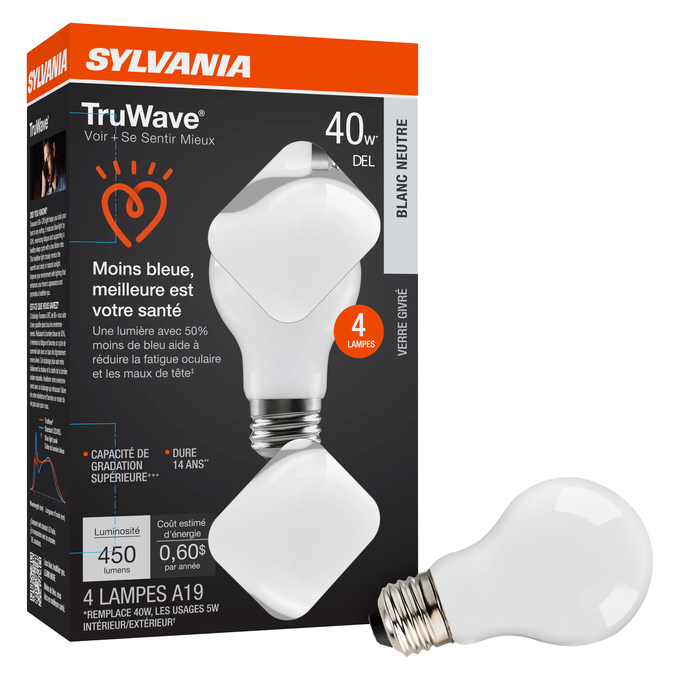
It controls blue wavelengths to reduce glare and eye strain, improving readability and supporting a healthier sleep-wake cycle. With a CRI of 90+, it provides clean, accurate color rendering that makes spaces, furnishings, and skin tones appear more realistic and vibrant, while maintaining high luminous efficacy. The lamp is dimmable down to 10% for flexible lighting control and offers a long 15,000-hour lifetime (L70), helping reduce maintenance requirements.
We have more A-line lamps and bulbs using E26 for you to select. LEDVANCE also offers full kinds of high performance illuminance, such as floodlight, high bay, panels, and spotlight. Contact us if you want to upgrade your lighting system with A19 or any bulbs with E26 base. Whether for stable bulk supply or customized professional lighting solutions, we're dedicated to serving you.
It’s important to note that E26 is mainly used in 120V voltage systems in countries such as the United States, Japan, and Canada. Meanwhile, E27 is typically used in 220-240V systems in Europe, Asia, and other regions. Therefore, when using these lamp holders across countries, buyers must confirm their voltage compatibility.
E26 and other screw-type lamp holders like E27 share similar appearances and functions. People can often use them interchangeably, especially with LED bulbs.
It is ideal for home lighting and commercial space lighting, such as ceiling fixtures, hallways and offices. Many Wi-Fi and Smart bulbs come in A19 for easy retrofitting. In short, A19 is perfect for any space needing reliable and versatile lighting.
Yes, an A19 bulb can be used in an E26 socket. In fact, most A19 bulbs are designed with an E26 base, making them fully compatible with standard E26 sockets commonly used in residential and commercial lighting applications.
No. E26 is just a bulb base type; whether it can be replaced depends on the bulb's shape, size, and luminous efficacy. Buyers should confirm the available space, light distribution, and application requirements before selecting a suitable bulb.
FOLLOW US ON:


