

The biggest difference between A19 and A21 light bulbs lies in their size. A19 light bulb is 2.375 inches in diameter and 4.13 tall; A21 light bulb is 2.625 inches in diameter and 5 inches. The two bulbs differ in lumen output, luminaire compatibility, and applications. This guide will deeply cover how to choose between A19 and A21 light bulbs for your business or property.

The A-type light bulb is the standard, pear-shaped light bulb that comes in various forms. The number following the "A" indicates the bulb's diameter in eighths of an inch. For example, the diameter of an A19 bulb is 2.375 inches, while an A21 bulb measures 2.625 inches in diameter.
The most prevalent A-type bulbs in commercial and residential applications are A15, A19, A21, A23, and A25, with A19 and A21 accounting for the majority of standard luminaire installations.
The optimal choice between A19 and A21 depends on intended application.

If you're looking for a versatile bulb that fits well into a wide range of fixtures, the A19 bulb is an excellent choice. It has been the standard size for over a century, and many light fixture manufacturers design their products to accommodate its dimensions. On the other hand, the A21 bulb may meet installation challenges in smaller fixtures like lampshades, frames, or harps due to its larger size.
Also, A19 bulbs are highly compatible and suitable for most lighting fixtures. It is commonly found in commercial lighting scenarios such as offices, retail stores, hotels and schools. Aligned with standardized dimensions using A19 can reduce installation restrictions and simplify the later maintenance and replacement processes.
Conversely, if there are some small light fixtures, an A21 light bulb may not be installed since its size may not fit smaller fixtures.
Furthermore, the A19 is more economical. A classic A19 LED bulb only requires 8 to 10 watts to provide about 800 to 1100 lumens, making it highly suitable for offices, hotels, retail stores, and other places where lumen output is not highly demanded. In contrast, A21 bulbs are typically designed for higher-brightness applications and usually require 15 to 20 watts of power to generate 1600 lumens or higher. Although higher output power is beneficial for large open areas, it will also increase energy consumption and heat generation. For commercial projects with long operating hours, the difference in energy consumption will become very significant over time. For instance, if it operates for 10 hours a day and replaces a 15-watt A21 bulb with a 9-watt A19 bulb, each lamp can save approximately 22 kilowatt-hours of electricity annually. For large-scale facilities, this reduction can translate into huge savings in operation and maintenance costs.
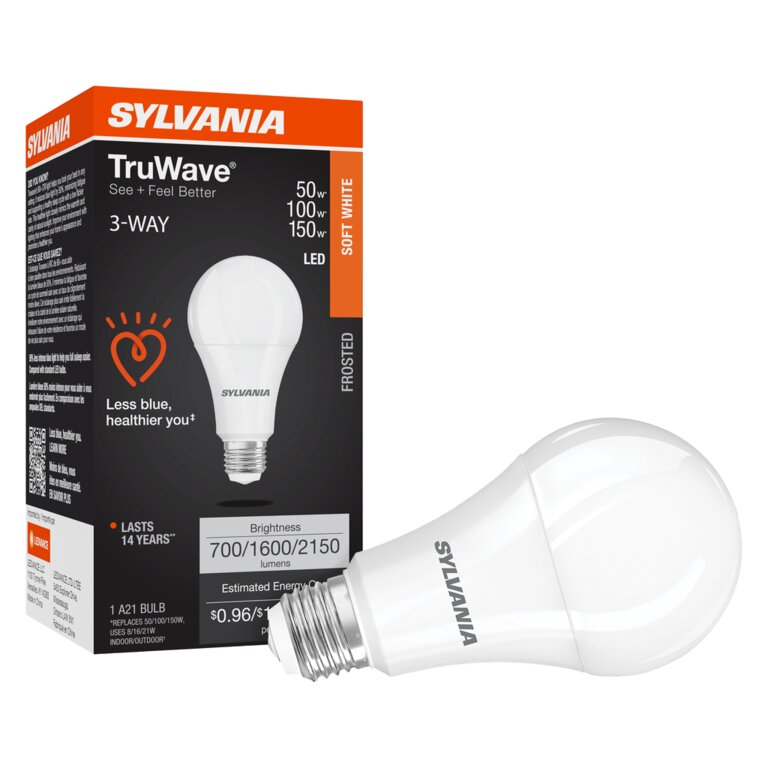
A21 light bulbs produce more light than the A19, which is about 1500-2600 lm. This is because the larger A21 housing provides more surface area for heat dissipation, allowing it to accommodate higher-wattage LED drivers and components more effectively. As a result, A21 bulbs are capable of delivering higher lumen output than smaller A19 bulbs.
In addition to the brightness and size, it is crucial to consider the layout and dimensions of the space, how the light will be distributed, and the unit budget. A21 is generally the choice for high-ceilinged spaces, warehouses, retail stores, or any environment where a single bulb needs to provide significant ambient lighting.
Although the A21 has a higher power, it doesn't mean that energy efficiency is compromised. In business evaluations, luminous efficacy (lm/W) is the core. Many high-performance A21 bulbs, while providing stronger lighting capabilities, have achieved or even exceeded the luminous efficiency level of A19. This means that when pursuing higher brightness, you don't have to compromise on energy-saving performance.
A19 and A21 bulbs are generally interchangeable because they both use the same E26 screw base, making them compatible with most standard sockets.
However, suitability also depends on the fixture itself. A21 bulbs are larger than A19 bulbs, so in fixtures with limited space, small shades, or enclosed designs, they may not fit properly or could restrict airflow. This can lead to heat buildup, which may shorten the bulb’s lifespan and impact safety.

Wattage measures electrical power and is calculated by multiplying voltage and current (W = V × A). But in modern lighting, especially when comparing A19 and A21 bulbs, it’s no longer the most useful metric. What really matters is how much light a bulb produces, measured in lumens. You need to know the lumens rating for a direct product comparison.
In simple terms, one watt equals one joule of energy transferred per second. A traditional 40W incandescent bulb consumes 40 watts of power, most of which is wasted as heat instead of light. The distinction between heat and light output when comparing incandescent and LED technologies is what generates the energy-saving difference. For instance, a 40W incandescent bulb and a 10W LED bulb produce the same lumens, but the LED saves 30 watts of power.
With modern LEDs, efficiency is similar across both A19 and A21 formats. The key difference is not how much power they consume, but how much light they deliver. That’s why lumens should be the primary metric instead of wattage when choosing between them.
The primary reason an A21 bulb exists is to handle more power. Because high-output LEDs (like 100W, 125W, or 150W equivalents) generate more internal heat, they require the larger physical body of the A21 to dissipate that heat safely. If you try to squeeze 150W worth of brightness into a tiny A19 frame, the bulb will likely overheat and fail prematurely.
In short, don’t rely on wattage alone when selecting between A19 and A21 light bulbs.
When comparing A19 vs. A21 light bulbs, the primary difference is the size. For projects that prioritize standard fixture compatibility, balanced brightness, and lower operating costs, A19 bulbs are often the more practical choice. For applications requiring higher lumen output and broader light coverage, A21 bulbs are generally more suitable.
When making the final selection, consider factors such as fixture clearance, lumen requirements, color temperature, and application environment. Or, contact us to gain tailored recommendations based on your project requirements and installation conditions.
FOLLOW US ON:


