
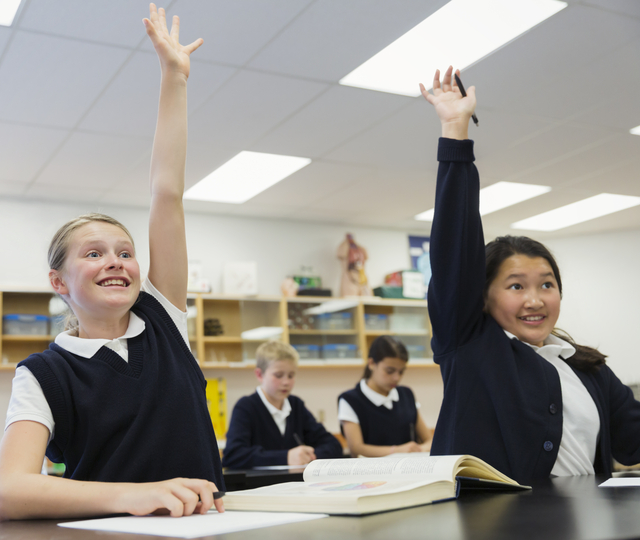
This is the most common lighting design problem in any educational facility whether an elementary school, high school, vocational school or institution of higher learning. A classroom can take many forms and can be quite literally any space with the building where learning occurs. In some cases, students spend their entire day inside one classroom while in other cases, different subjects are taught in that same classroom to different groups of learners during day and evening hours. As the most intensively used spaces in the building the lighting design must allow for a wide variety of instructional methods.
The arrangement of furnishings, resources and task areas, even the placement of instructor and the students in today’s classrooms is as varied and as flexible as in a modern office. The lighting needs to be equally flexible and responsive. With laptops becoming a standard fixture at each student’s work area, lighting that was adequate for fixed vertically oriented display screens, will now be problematic for screens that move about the workspace and tilt as much as 55 degrees off vertical. Designs for new and future school construction include advanced glazing materials and window and skylight placement to provide overhead light for tasks, while minimizing heat loss or gain and HVAC loads. Daylight control systems incorporate window baffles, shades and diffusers to adjust to the sun’s seasonal movement while daylight harvesting sensors and controls adjust lighting illuminance levels for maximum energy savings and extended lamp life.

FOLLOW US ON:


