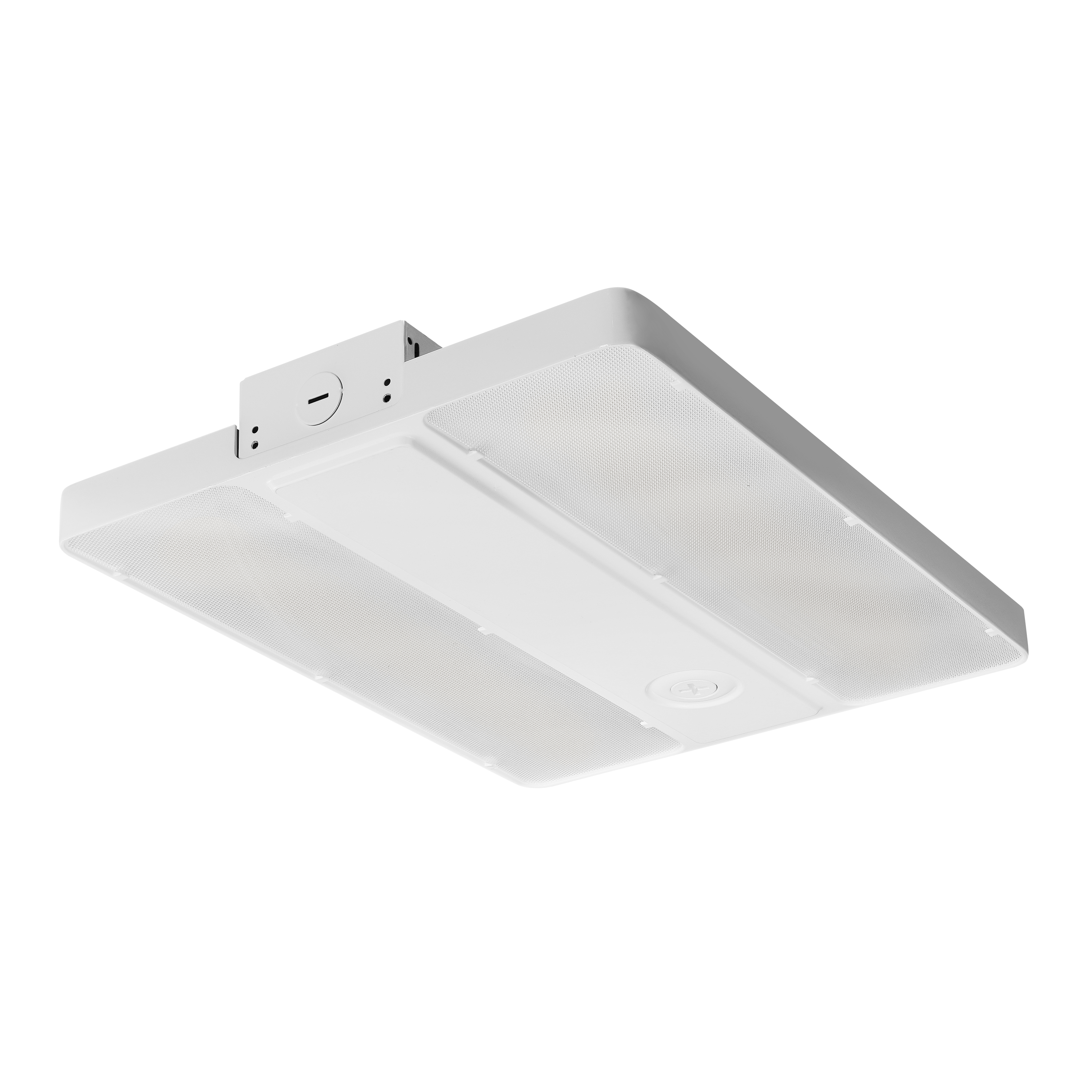
LED Retrofit Kits: Upgrade Your Commercial & Industrial Lighting

Linear LED High Bay Lights Application Guide


Large, high-ceiling spaces require lighting solutions that deliver high efficiency, powerful illumination, and low maintenance costs. Linear LED high bay lights are the premier luminaire for these demanding environments, offering a modern alternative to outdated fluorescent lamps. 
Throughout this guide, we provide a comprehensive LED linear high bay lights application to help you navigate the technical specifications, highlighting applications  in warehousing, manufacturing, and retail environments. 

linear led high bay lights application

What are Linear LED High Bay Lights

Linear LED high bay lights are industrial lighting fixtures used in high ceiling spaces. Their shape is usually long and narrow, rather than the traditional round high-bay fixture. LED technology provides high luminous efficacy and excellent energy efficiency. With a more even light distribution, linear LED high bays are an ideal solution in warehouses, factories, workshops, and large commercial buildings.

When Should You Choose Linear High Bays Instead of UFO High Bays?

The most critical difference between linear and UFO LED high bay is their shape. UFO high bays have a compact, round “flying saucer” appearance. Because of this design difference, it is better to choose linear high bay instead of UFO high bay for the following areas:
  • Aisle or shelf: Continuous linear high bay helps create more uniform light distribution while reducing shadows and dark spots.
  • Large spaces with high ceilings: It is easier to cover compared with UFO high bay.
  • Clearly illuminated workbenches: Its linear light distribution matches the shape of workbenches and production lines, providing more uniform illumination.
  • Inconsistent installation height: Linear LED high bay light is more flexible to adjust lighting layout in facilities with different ceiling heights or structural obstacles such as beams, ducts, and piping.

Key Benefits of Linear LED High Bay Lights

Here are some key benefits of linear high bay lights that make them an ideal lighting solution for commercial and industrial spaces.
  • Uniform lighting: The linear light-emitting design allows for even light distribution.
  • Energy efficiency: Linear LED high bay consumes less power while delivering high lumen output.
  • Flexible layout: Lights can be arranged according to the length and structure of the space.
  • Reduce glare: It can effectively distribute light and minimize the direct glare of large-area lighting on workers' eyes.
  • Precise beam angle: Linear LED high bay can achieve precise narrow beam distributions of 30°, 60°, or 90° by changing the lens.
  • Modular design: Many linear high-bay lights adopt a modular structure, so the failure of a single driver does not affect the overall operation. 
  • Low maintenance costs: With a lifespan of up to 50,000 hours, it reduces replacement frequency and high-altitude maintenance.

Limitations of Traditional Linear High Bay

Traditional linear high bay fixtures usually use fluorescent or HID light sources and were once common in industrial and commercial facilities. However, as lighting technology has advanced, their limitations have become more noticeable.

Before choosing a linear LED high bay, it's important to understand the drawbacks of traditional high bay fixtures and why many facilities are switching to LED technology. 

Compared with modern LED solutions, traditional high bay lights are less energy efficient and consume more electricity to deliver the same level of brightness. They also have a shorter lifespan, requiring more frequent lamp or bulb replacements, which increases maintenance costs and downtime, especially in high-ceiling applications.

In addition, fluorescent lamps may contain mercury and other harmful materials, making disposal and recycling more complicated. Traditional fixtures also tend to have slower start-up times, apparent light decay, and limited dimming or smart control capabilities.

Application for LED Linear High Bay Light

LED linear high bay light is suitable for lighting requirements in a variety of commercial and industrial applications.

Warehousing & Logistics

In warehouse or logistics settings, traditional round high bay lights often create uneven lighting, with excessive brightness above racks and shadows on the floor. In contrast, LED linear high bay lights provide elongated light distribution that better covers aisles and rack faces. It reduces light waste and improves the safety of forklift drivers reading delivery notes and operating equipment. Its vertical illuminance performance at high mounting heights is difficult for round fixtures to match.
linear led high bay in warehouse

Food Processing Plants

Linear LED high bay lights are typically designed with smooth extruded aluminum or die-cast aluminum housings, making them easy to clean and resistant to dust buildup. Compared with traditional metal halide fixtures, LED linear high bays are mercury-free and often equipped with shatter-resistant PC lenses, helping meet food safety standards such as NSF certification. Their high color rendering index (CRI 80+ or 90+) also allows quality inspectors to accurately identify food colors and detect defects more easily.

Precision Manufacturing

In automotive assembly lines and electronics manufacturing facilities, lighting fixtures are often installed at low to medium mounting heights. With multiple LED modules arranged in a linear layout, it provides softer and more uniform illumination than single-point light sources, helping reduce glare and reflections on metal surfaces.

This is especially beneficial for workers who spend long hours focusing on precision components, as it can reduce visual fatigue. Their modular design also allows seamless continuous-row installation along production lines, creating uninterrupted light coverage and minimizing visual blind spots at workstations.

Supermarkets & Big Box Retail

In high-ceiling retail environments such as wholesale clubs and large-format home furnishing stores, lighting directly impacts sales. Linear LED high bay lights not only provide basic lighting, but their uniform appearance also adds a modern and decorative touch. 

Their high CRI performance accurately reproduces product and packaging colors, helping enhance product presentation and encourage purchases. In addition, when combined with PIR sensors or 0–10V dimming systems, the fixtures can automatically reduce power consumption when aisles are unoccupied, significantly lowering energy costs for facility operators.

Indoor Sports Courts

LED linear lights provide flicker-free illumination, which is essential for tracking fast-moving sports such as badminton and table tennis, while also meeting the requirements for high-definition video recording. Since sports facilities often face the risk of ball impact, these fixtures are commonly equipped with durable mounting brackets and protective guards.

Their wide beam distribution also helps maintain excellent lighting uniformity across the entire court, meeting professional sports lighting standards for illuminance uniformity Emin ​/ Eave  and delivering greater visual comfort than traditional spotlights.
led linear high bay in sport hall
The applications of LED linear high bay lights extend far beyond these examples. From climate-controlled laboratories and modern indoor farms to complex logistics centers, they are used in a wide range of environments.

How to Choose the Right Linear LED High Bay

As mounting height doubles, ground-level illuminance (lux) drops significantly. Therefore, the higher the installation, the narrower the beam angle should be to prevent light from being wasted on walls or in the upper space.

In terms of glare control (UGR), for installations below 6 meters, workers are more likely to be exposed directly to the light source. Frosted lenses or anti-glare louver designs can help improve visual comfort.

The table below provides general guidance for selecting the appropriate wattage, lumen output, and beam angle based on different ceiling heights. 
Mounting Height (m) Wattage Lumen Beam angle Typical Applications
4 - 6 100W - 150W 14,000 - 21,000 120° Workshops, retail warehouses, assembly areas, packing stations
7 - 10 200W - 240W 28,000 - 36,000 90° / 60° Standard warehouses, manufacturing facilities, logistics centers
12+ 300W - 400W 45,000+ 30° / 60° Distribution centers, aircraft hangars, large industrial plants
Also, don’t forget to consider requirements for advanced control systems, like PIR or motion sensors, 0–10V dimming, daylight harvesting, and smart building integration. Combined with LED linear high bay lighting, these smart controls enable lighting to respond dynamically to occupancy, workflow, and available natural light.

Installation Method for LED Linear High Bay

Depending on the building structure and lighting requirements, there are several main installation methods.

Suspended Mounting

Suspended mounting is the most common and classic installation method for linear high bays. It uses two metal hanging chains to connect the hooks on the back of the light to the ceiling’s I-beam or crossbeam. 

Key Features: Adjustable height. The fixture’s hanging height can be easily adjusted by changing the chain length, making it ideal for spaces with sloped ceilings or varying roof heights.

Surface Mounting 

Used when the ceiling height is low or when the fixture needs to be mounted close to the ceiling. It uses a U-bracket or by directly securing the mounting holes on the back of the fixture to ceiling expansion bolts. 

Key Features: Save space. Preserve the maximum indoor ceiling height. Delivering a clean, streamlined appearance, it creates a more uniform visual look while being less prone to dust accumulation.

Pendant Mounting

Similar to the installation method used for street lights or certain pendant fixtures, it is connected using a metal conduit. The back of the LED linear high bay light is equipped with a special threaded connector that screws directly into the metal conduit at the top.

Key Features: Stability. Compared with suspended mounting, it does not sway with wind or airflow, keeping the light beam consistently vertical.

Regardless of the installation method chosen, LED linear high bay fixtures are usually heavy and mounted at significant heights. It is essential to ensure that the mounting point has a load-bearing capacity of at least five times the weight of the fixture. In addition, a safety cable is strongly recommended as a secondary safeguard to prevent the fixture from falling in extreme or unexpected situations.

Maintenance Tips for LED Linear High Bay

At heights of 10 meters or more, the cost of replacing a single luminaire often exceeds the cost of the fixture itself. Therefore, it’s important to extend the lifespan of luminaires to reduce maintenance costs and downtime.

Clean the back heatsink regularly

Dust tends to accumulate on the heat sink fins at the back of LED linear high bay, which can accelerate LED chip lumen depreciation. It is recommended to clean them every 6–12 months using a blower or a long-handled brush. This simple maintenance step can extend the service life of the fixture by at least 20%.

Inspect Mounting Hardware

Regularly inspect all mounting components, including chains, cables, brackets, hooks, and fasteners, to ensure the LED Linear High Bay fixture remains securely supported. Over time, vibration, temperature changes, and daily facility operations can cause hardware to loosen or wear. Check for signs of corrosion, bending, cracks, or other physical damage that could affect fixture stability.

Sensor (PIR/microwave) installation location

LED linear high bay lights are often used together with sensors, but it’s important to pay attention to the placement of the sensors. The sensor should be installed directly beneath the luminaire. Make sure to avoid large ventilation outlets or fan blades, as their movement may interfere with the microwave sensor and cause false triggering, keeping the light continuously on.

LEDVANCE: Your Best Linear High Bay LED Lights Supplier

LEDVANCE offers LED linear high bay available in 8 different wattage and lumen output, providing flexible solutions for various ceiling heights and lighting requirements. Linear LED high bay lights deliver outstanding performance in both retrofit projects and new installations. Key features include:
  • Up to 73% in energy savings
  • 4000K or 5000K color temperatures
  • A variety of mounting accessories and wire guards 
  • Dimmable (0-10V) down to 10%
  • 100,000 hour L70

Case Study: Centerline Manufacturing Campus Lighting Retrofit

LEDVANCE supports Centerline Windsor Ltd. to replace 887 LEDVANCE LNHIBA6A LED high-bay lights on a one-to-one basis across 4 buildings.
 
What the upgraded LEDVANCE Linear High Bay lighting offers:
  • The average illuminance increased from approximately 27 fc to 62 fc.
  • After 30 minutes of inactivity, the lights automatically dim to 50%, and after another 15 minutes, they dim further or turn off.
  • Unnecessary nighttime lighting operation time is reduced by 75–80%.
  • By reusing existing voltage and wiring, the entire process involves almost zero downtime and has minimal impact on production.
  • Significantly improves employee visual comfort and safety.
  • Reduce energy consumption and maintenance costs.
led linear high bay upgrade project
If you also want to upgrade lighting solutions with LED linear high bay, contact us to learn more, request a specification profile, or get a tailored lighting solution for your lighting project.

FAQs for Linear LED High Bay Lights
What LED linear high bay beam angle is best for warehouse aisles?

In warehouse aisles, linear LED high bay lights are suitable at 60° or 90° angles. They can concentrate light onto the ground and shelves to reduce light waste.

Can LED linear high bays be dimmed?

Yes, LED linear high bay lights are usually dimmable. Provided the luminaire itself supports dimming. Common dimming methods include 0-10V dimming. Some models also support DALI or PWM systems.

Which certifications are important when selecting linear LED high bay lights?

Look for UL or ETL listing for electrical safety, and DLC qualification if you plan to apply for utility rebates