Metal Halide LED Replacement Guide: Wattage Equivalent & Retrofit Tips

Do LED Lights Need a Ballast? Full Explanation

Knowing whether LED lights need a ballast directly affects safety, installation cost, and long-term maintenance. For contractors, facility managers, and buyers, this knowledge helps avoid costly mistakes during retrofits and upgrades. In this blog, we'll explain whether LEDs need ballast and how different LED solutions work to help you gain clear guidance on choosing the right upgrade plan.

do led need a ballast

What is a Ballast?

A ballast is an electrical component used in traditional lighting systems. Its main function is to control the current. When fluorescent lamps are started and operating, the lamp tube itself cannot automatically limit the current. Without a ballast, the current will continue to rise, and the lamp will be damaged quickly.
Early ballasts were commonly inductive, which were bulky and produced noise and flicker. Later, electronic ballasts emerged, which were smaller, more efficient, and provided more stable light output. 
led retrofit street lighting

Do LED Lights Need a Ballast?

Most LED lights do not require a traditional ballast. Many LED lighting solutions are designed to operate without this additional component. Whether or not a ballast is needed depends on the design of the LED light and the application settings. For retrofit projects, certain LED lamps are made to work with compatible ballasts, while others are intended for ballast-free installations.

LEDs Need Driver Instead of Ballast

Unlike traditional lighting, the situation changes in LED lighting. LEDs are DC-driven semiconductor light sources with inherent current control characteristics. Most LED luminaires integrate a driver to convert AC power to the appropriate DC power and precisely control the current. Continuing to use an old ballast may actually reduce efficiency, shorten LED lifespan, and even cause luminaire failure.

Therefore, while ballasts are essential for traditional lighting technologies, they are often redundant for modern LED lighting. This is why it is common practice to bypass or remove the original ballast when upgrading from fluorescent or HID lamps to LEDs.

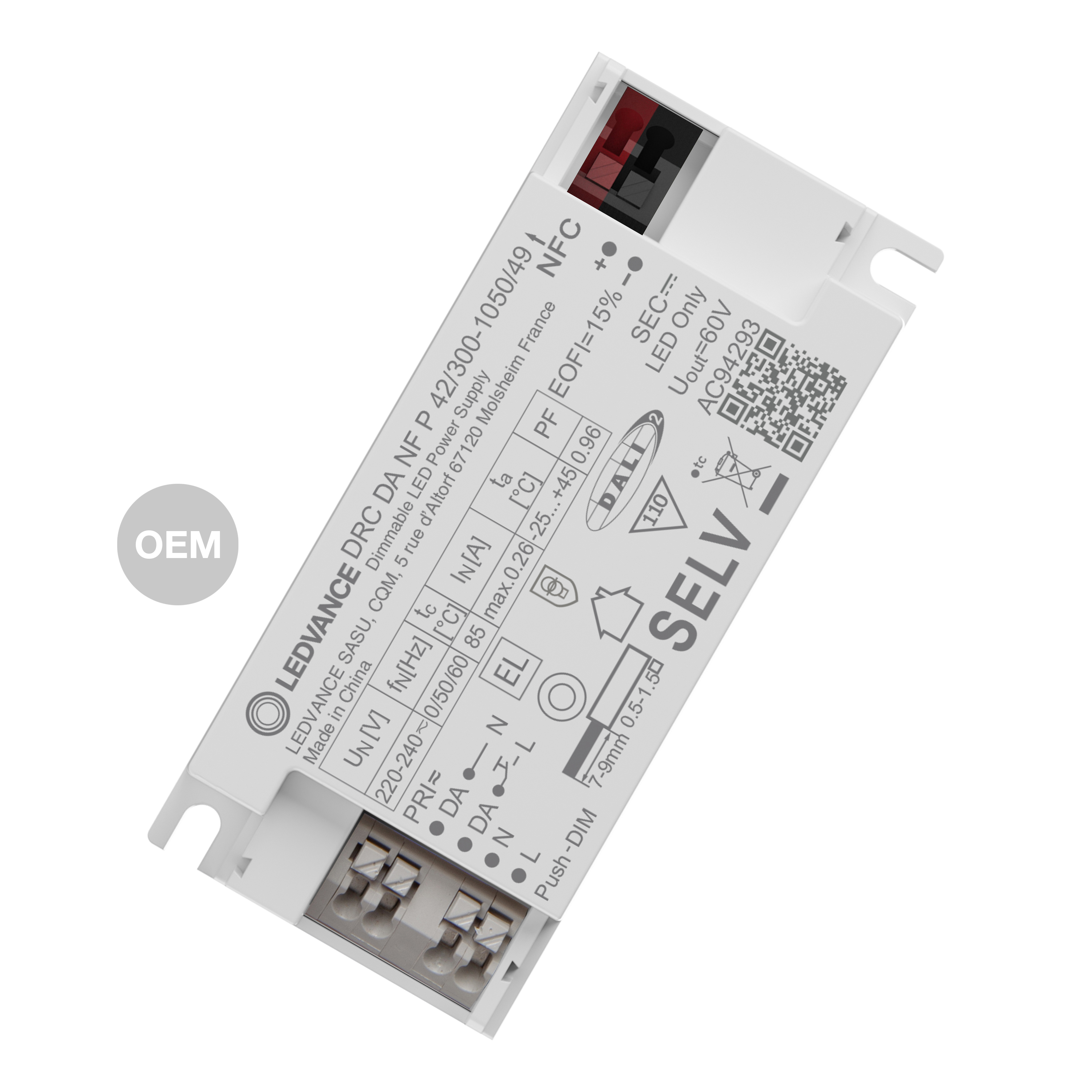
What is an LED Driver?

The operation of an LED driver power supply is to convert AC power into regulated DC current. At the same time, it will control the voltage and current within the range required by the LED. This step is extremely crucial for the safety and lifespan of the lamps.

The LED driver continuously controls the output current through constant current or constant voltage mode, ensuring that the LED always emits light in a safe state. This is also an important reason why LEDs  help reduce flickering in properly designed systems. A high-quality LED driver can also improve the efficiency of the entire lamp. Less heat generation helps protect the LED chip and internal components.

In modern LED lighting fixtures, the driver often supports dimmability and intelligent control, such as 0–10V dimming, DALI control, and sensor control. All of these functions require an LED driver.

Internal vs. External  LED Drivers

LED drivers can be divided into two types: internal drivers and external drivers. This is also why some LED bulbs look very similar to traditional bulbs, while some LED lamps have an additional power box beside them.

The internal driver is directly installed inside the LED lamp. This type of LED light has a simple, all-in-one design and works as soon as it is connected to power. Most LED bulbs, panel lights, and downlights use this internal driver structure. Installation is similar to traditional lamps, making it quick and easy to use. It’s suitable for spaces with limited room and high aesthetic demands.
 
The external driver is housed in a separate power supply box. The LED lighting is connected to the power supply via a wire. This design is very common in strip lights, high bay lights, linear lights, and industrial lighting. The advantage of an external driver is better heat dissipation. The LED driver is unaffected by the lamp body temperature, resulting in more stable operation and a longer lifespan.

Plug and Play LED Tubes vs Bypass Ballast LED Tubes

When replacing commercial or residential lighting with LED tubes, it is commonly faced with two product choices.

Plug-and-play LED Tubes

Provided it features a compatible ballast, it can be directly installed in the existing fluorescent fixture and continue to use the old ballast. 
  • Pros: The modification is quick and does not require rewiring.
  • Cons: Ballasts consume energy and may also age and fail.
Best for: When you want to directly replace old fluorescent tubes without altering the internal wiring of your existing light fixtures or rewiring, plug-and-play LED tubes are the most convenient option. The prerequisite is that the ballast in your existing light fixture must be fully compatible with the LED tube to achieve true plug-and-play safety and efficiency. It is suitable for quick upgrade with minimal downtime, helping you avoid rewiring costs and achieve fast ROI.

Bypass Ballast LED Tubes

When installing LED lights, disconnect or remove the existing ballast. Depending on the product design, bypass ballast may involve single-ended or double-ended wiring.
  • Pros: Improve system efficiency and stability.
  • Cons: Require electrical knowledge for simple rewiring and should be performed by a qualified electrician
Bypass ballast LED tubes reduce the probability of failure. Fewer components mean less time for maintenance and troubleshooting. When upgrading from an old lighting system, some use inductive ballasts, while others use electronic ballasts. There is no need to distinguish the types of old ballasts, making installation  easier.
Ideal for: Bypass ballast LED tubes are suitable for locations where existing fluorescent lamp ballasts are aging, damaged, or have high maintenance costs.

Consider Total Cost of Ownership (TCO)

When you consider choosing ballast compatible or ballast bypass LED, total cost of ownership should be taken into account. What the lighting system costs across its entire life cycle, not just at purchase. TCO forces a deeper question that what are you actually carrying forward when you keep the ballast.

Hidden Energy Loss 

Even when a fluorescent ballast is still functional, it is not efficient, often consuming an additional 10% to 20% of wasted energy just to power itself. That stacked inefficiency may look small per tube, but across large scales in a warehouse or office building, it becomes a permanent energy penalty paid every hour of operation.

Maintenance Cost Accumulation

Plug-and-play LEDs have higher maintenance probability that create indirect costs, such as technician dispatch time, lift rental for high-bay fixtures, operational downtime in commercial spaces, emergency replacements at higher labor rates. With labor and equipment often costing 3 to 5 times the price of the replacement tube itself, ballast failures become a recurring operational tax over time.
ballast maintenance

Product Lifespan Mismatch

LED tubes are often rated for 30,000–50,000 hours. Ballasts, especially older ones, rarely match that lifespan.  It means to replace LEDs too early because the ballast fails first. Or it has to replace both, even though the LED itself still has usable life. Either way, it is not extracting full value from the LED investment. This mismatch quietly destroys ROI.

Scale Effect

At a small scale, LED ballast choice barely moves the financial needle. At larger scale, such as factories, logistics hubs, parking structures, retail chains, it compounds. A 1%–5% efficiency difference becomes thousands of dollars in annual energy cost. Even a few ballast failures per month disrupt operations and increase maintenance workload. Also, standardization becomes critical for inventory and maintenance planning. This is where bypass systems often dominate TCO models in that they improve consistency in the system.

Conclusion

So do LED lights need a ballast? Not really. LED technology was designed to simplify lighting, not inherit the limitations of the past. While ballast-compatible options can make upgrades easier, they also keep you tied to a component that can fail, waste energy, and quietly shorten your system’s potential.

If you’re thinking long-term, the smartest move is often the cleanest one that removes the ballast and lets LEDs operate the way they were meant to. You can consider LEDVANCE LED retrofit product collection to help your lighting project be direct, efficient, and low-maintenance. The real upgrade isn’t just switching to LED. It’s leaving unnecessary complexity behind.